Khalsa Chiropractic
Sitting Postural Release
One of the most common causes of back and neck trouble is the sitting posture. When you sit your body rounds forward straining the joints, ligaments and discs of your spine. Your muscles have to work as a ‘check-rein’ against gravity and become tired and sore as a result. This posture also affects your breathing by compressing your diaphragm and encouraging excessive breathing from the shoulder and neck areas. A simple exercise developed by a European neurologist has given relief to millions of sufferers. This only takes a few minutes a day and will improve your overall postural appearance within just a few weeks of practice. Here are the steps:
The Brugger Relief Position
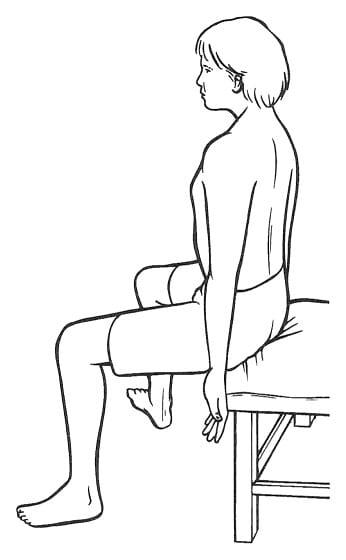
- Sit at the edge of your chair so you are perching
- Place your feet under knees then move them apart a little and turn them slightly outwards
- Roll your pelvis slightly forward so your back begins to arch
- Push your sternum forward and up
- Rotate your arms outwards so that your palms face forwards
- Separate your fingers as much as possible so that your thumbs face backwards a little
- Tuck your chin in slightly
- Hold this posture while you take a breath into your abdomen
- Repetitions: 2–3
- Frequency: two or three times per hour when sitting (Figure 1)
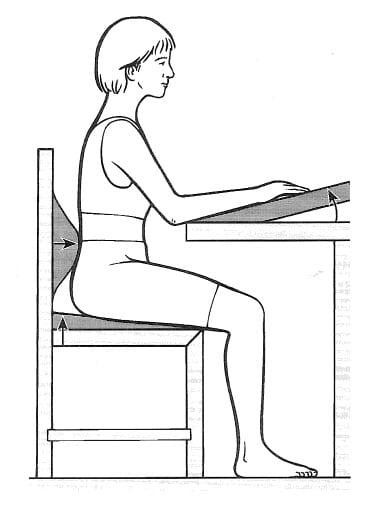
Certain ergonomic improvements can help you to achieve a more upright spinal posture. Tilting your seat, using a lumbar support or tilting your worksurface are additional ways to reduce strain on your posture (Figure 2).
Journal of Bodywork and Movement Therapies 3(3):149, 1999