Khalsa Chiropractic
Chin Tuck
Head and neck pain are very common. Did you know that headaches cause more people to stay home from work than anything but the common cold? Neck pain can occur from postural strain due to faulty sitting posture or excessive desk or computer work. It can also arise from trauma such as just a slight jolt in an automobile accident. Most headaches and neck pains go away quickly and are easily managed with over the counter medications. However, sometimes the pain persists or recurs frequently and it is important to address preventive factors. The most important such preventive factor is to improve the posture and fitness of your neck and upper back regions. This self-help article will guide you in a simple pro-active approach to improve the coordination and fitness of your neck musculature.
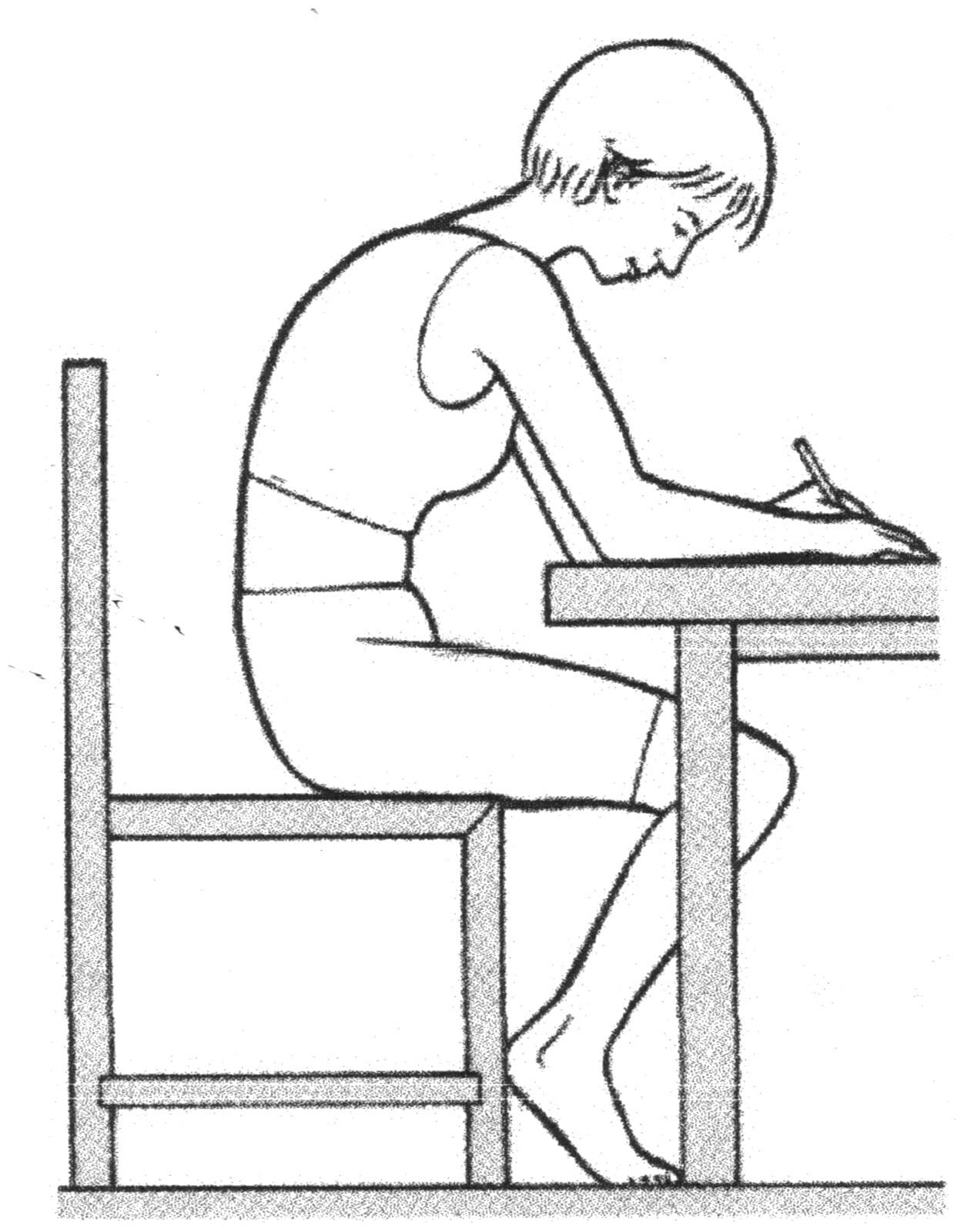
One of the common faults in neck posture which places increased strain on your head and neck structures is the head forward posture (Figure 1). For every inch your head moves forward of your upper back the strain on your neck increases exponentially! Thus, it is essential to try and maintain a more erect posture when working at a desk, driving a car, or performing arm activities (such as carrying things).
Your body’s musculature serves two functions. One, is to produce movement and the second is to control or guide that movement. The large, superficial muscles produce movement and are usually very active and easy to train. The deeper muscles which guide movements are important for preventing injury and they often become weak when you are in pain and thus require specific therapeutic exercises to activate and train them. A very simple exercise to train your ‘deep’ neck muscles is called the chin tuck.
The Chin Tuck – Beginner Position
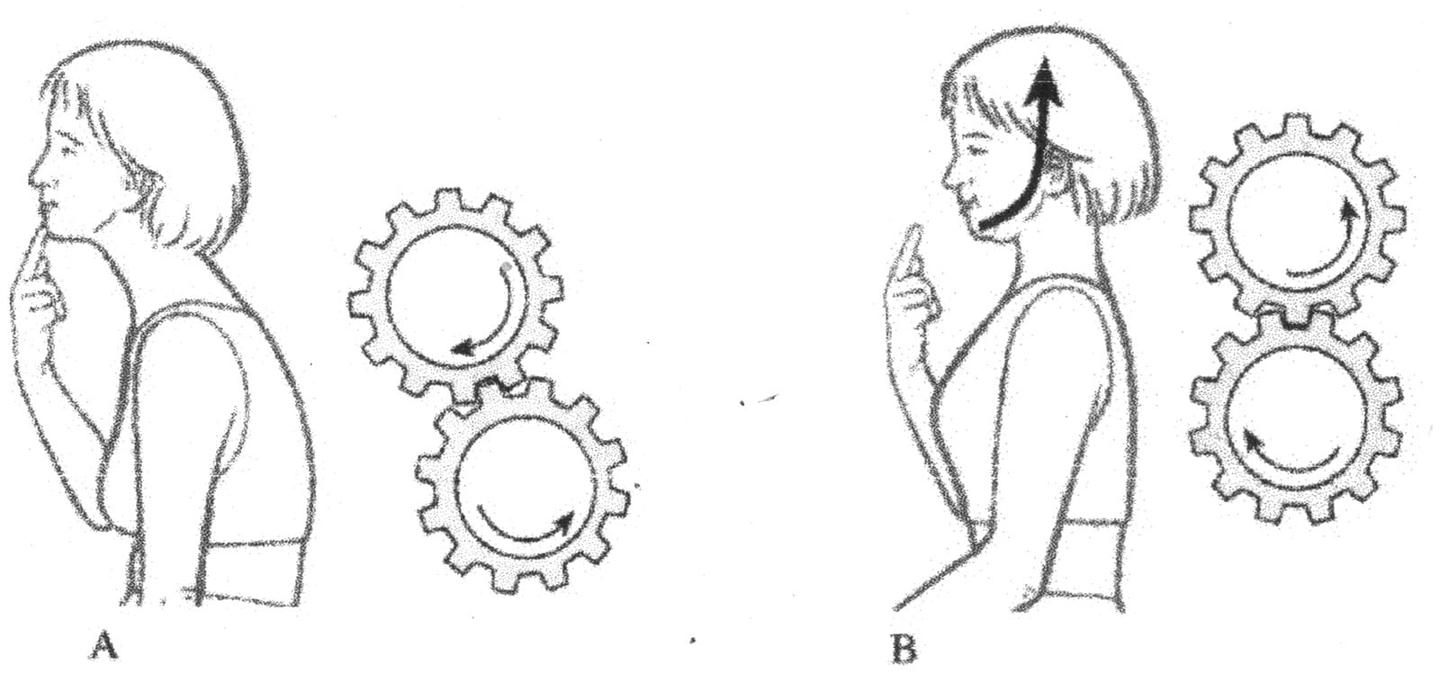
Your Starting Position
- Perch at the edge of your chair or stand up.
The Exercise
- Place your finger on the front of your chin.
- Then draw your chin away from your finger as you pull it in.
- This is basically a nodding movement with your head as if saying ‘yes’ without dropping your head or looking down.
- You should feel a gentle pull in the back of your neck as this stretches tight muscles there (Figure 2).
Repetitions: 2 to 3 slowly.
Hold: Pause for a second or two when the chin is in.
Frequency: Every 20 to 30 minutes when sitting for extended periods of time.
The Chin Tuck – Intermediate Position
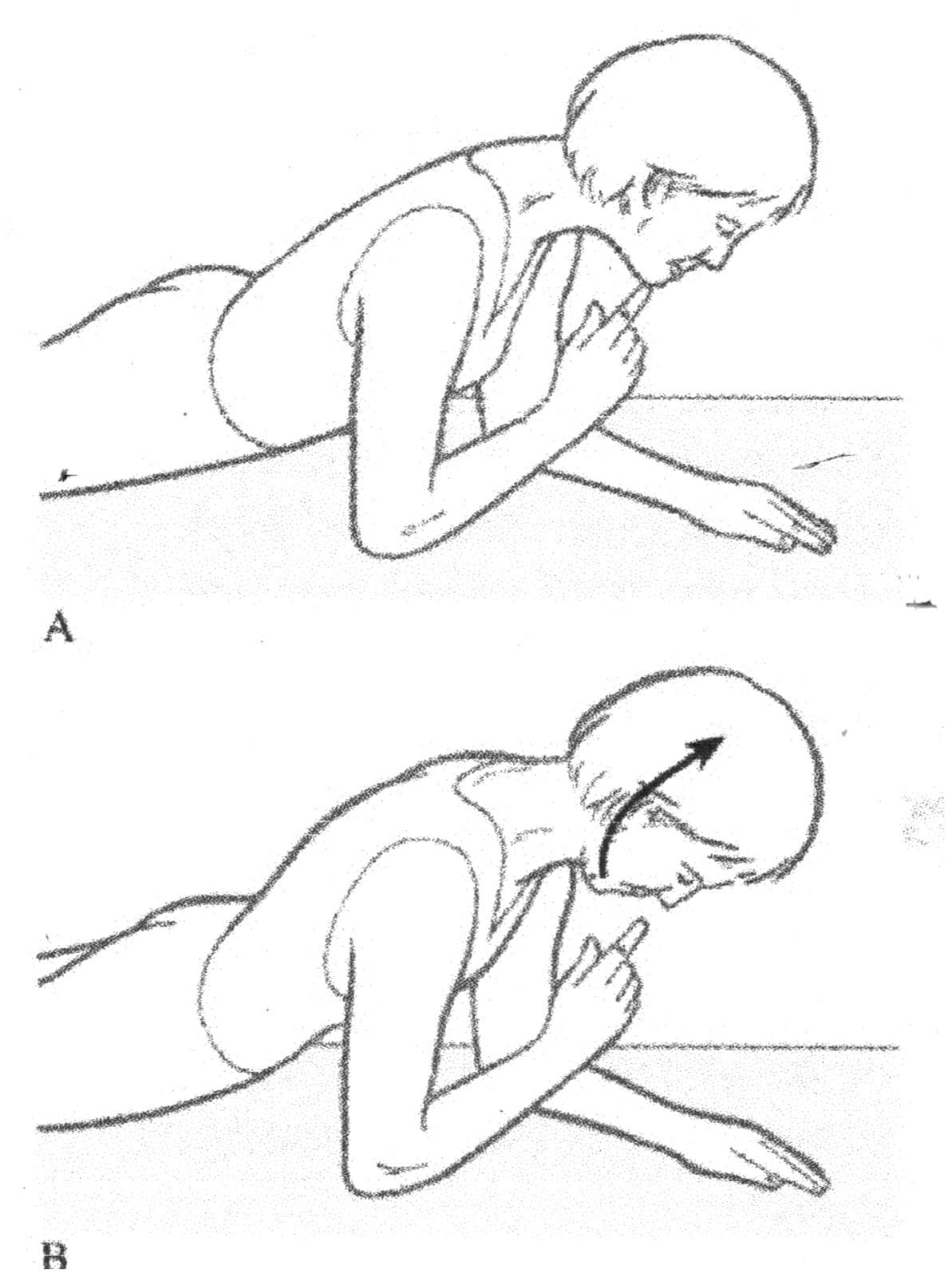
Your Starting Position
- Begin in the sphinx position.
- Relax your head, upper back and shoulders towards the floor.
The Exercise
- Place your finger on the front of your chin.
- Then draw your chin away from your finger as you pull it in and up towards the ceiling.
- As you draw your chin in press your upper back away from the floor (Figure 3).
Repetitions: 8–10 slowly.
Hold: Pause for a second or two when the chin is in.
Frequency: Twice a day.
The Chin Tuck – Advanced Position (The Wall Ball for the Neck)
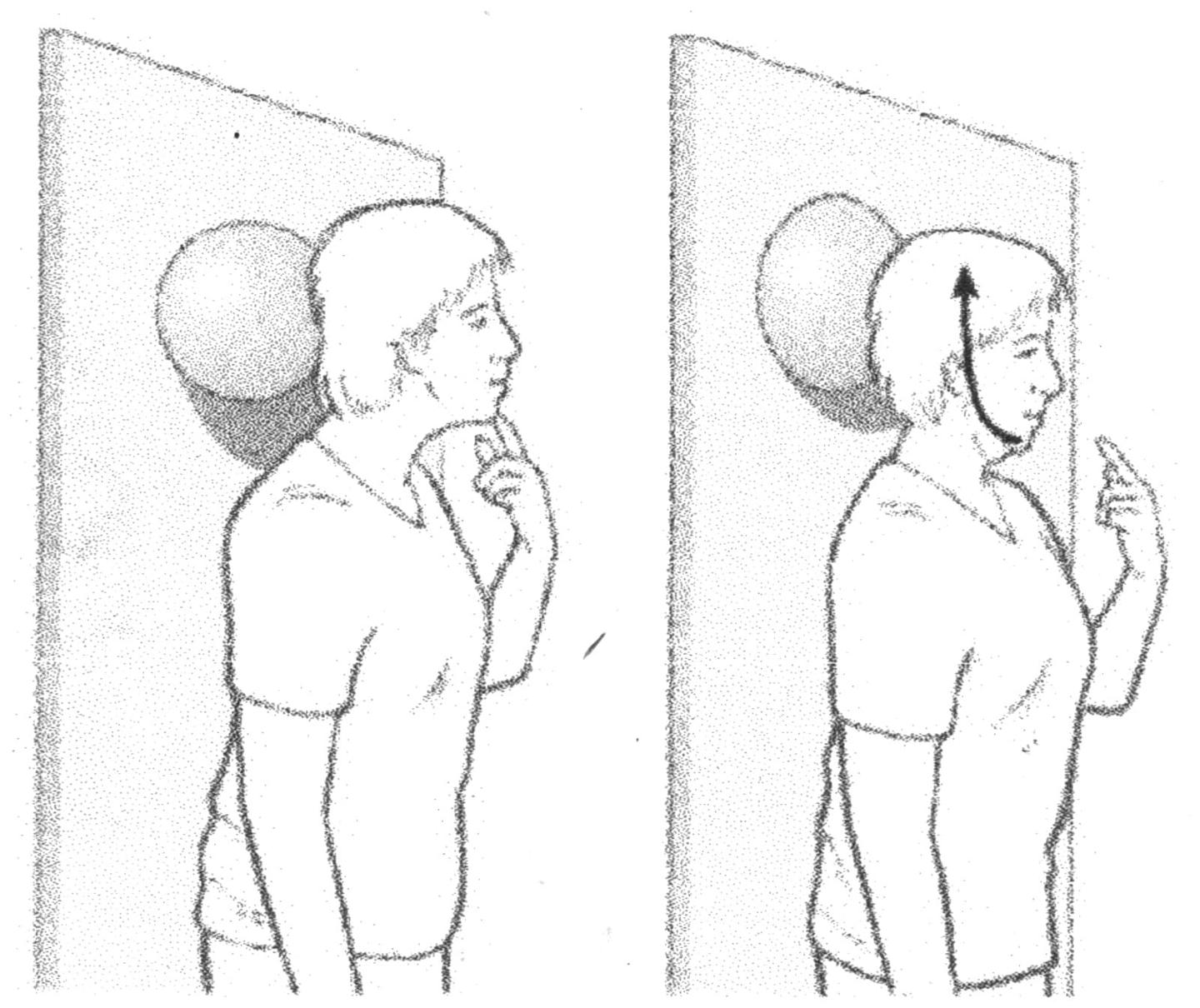
Your Starting Position
- Stand with your back against a wall.
- Place a small inflated ball behind your head.
The Exercise
- Nod ‘yes’ by tucking your chin in and pressing your head against the ball.
- The ball should roll slightly along the wall.
- Avoid looking down (Figure 4).
Repetitions: 8–10 slowly.
Hold: Pause for a second or two when the chin is in.
Frequency: Twice a day.
It is important that you concentrate on performing these exercises with good form. With practice of these and other neck correction maneuvers you can retrain how your neck functions on an automatic basis. The approach described here and supervised by your health care professional will advance you step by step through the three stages of ‘motor learning’. Namely, first awareness of the problem, second practice of the corrected postures and movements, and third automatization of a new postural habit in your nervous system.
Recovery from neck injury or prevention of headaches and neck pain requires more than a symptomatic approach. It is necessary to improve the posture and fitness of your neck and upper back regions. There are many different exercises that can be prescribed. Often the correct ones can only be identified by careful supervision with a health care professional trained in rehabilitation.