Khalsa Chiropractic
The All Fours Rock
This low-load exercise places the shoulder in an optimal posture for reducing further biomechanical irritation. Typically this entails avoiding overhead arm positions, slouching, and shrugged shoulders or rounded shoulders. The exercise shown here is designed to activate the stabilizing musculature of the shoulder girdle.
Purpose: This is an excellent exercise to wake up the deep stabilizers of the shoulder girdle.
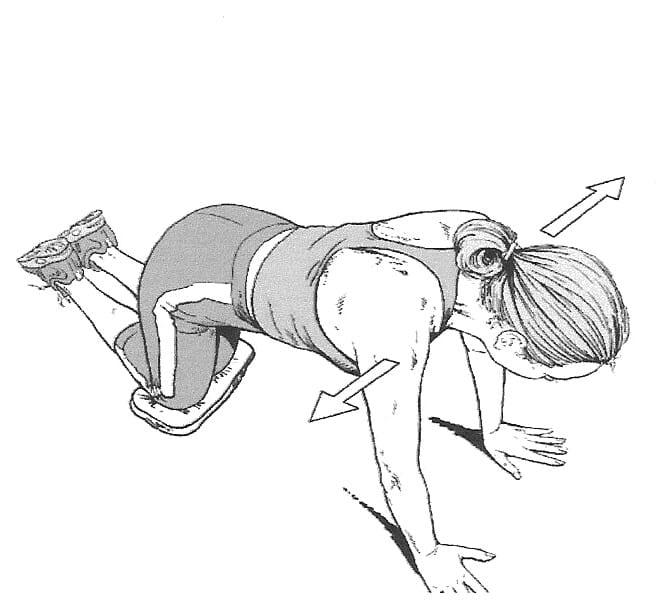
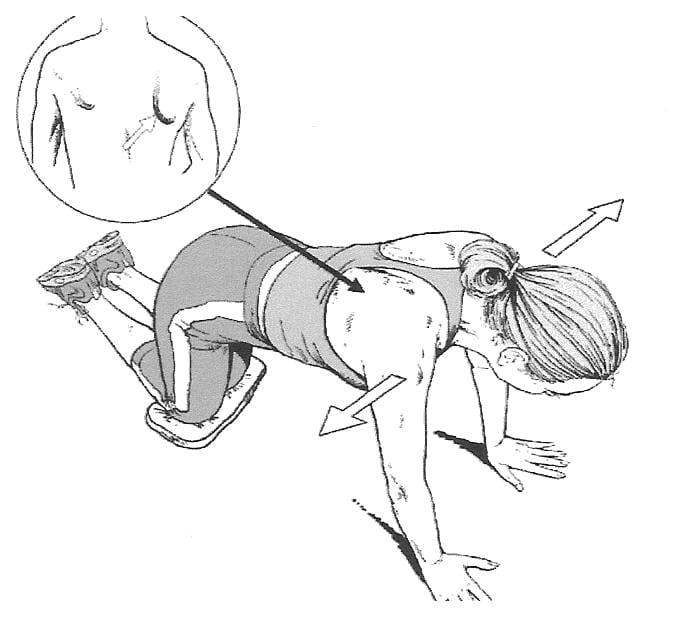
Starting Position
- On all 4’s (quadruped) perform a partial push-up
Exercise
- Lower your chest towards the floor and feel your shoulder blades slide together
- Push yourself back up and feel your shoulder blades begin to separate
- Push away or press your back up from the floor with your hands until your shoulder blades are separated as far as possible and your back moves up towards the ceiling
- Repeat this motion 8 to 12 times
Then
- Hold the “up” position (shoulder blades are separated as far as possible and back up towards the ceiling) and rock side to side 6 to 8 times in each direction.
- Return to center and repeat the up/down shoulder blade motion 2-3 times
Then
- Hold the “up” position and rock forward and back 6 to 8 times.
Fine Tuning: Perform the Rocking Motion While Keeping the Ideal Posture
- Draw your chin in so your head and neck are in line with your middle back
- Keep your middle back flat not round
- Avoid shrugging your shoulders up towards your ears
- Tighten your abdominal muscles without holding your breath or rounding your lower back
Dr. Craig Liebenson, Management of Shoulder Disorders. Reproduced with permission.