Healthy Life Newsletter, June 2020
3 Reasons to See Your Chiropractor (Now More than Ever)
Chiropractic wellness care has always been a critical element of health, but as the COVID-19 pandemic continues to impact our lives – even as restrictions begin to ease – chiropractic is more essential than ever.
Here are three reasons why you should be making an appointment with your chiropractor today:
1 . You’ve been ignoring pain: And you’re not the only one. With stay-at-home orders in place for the past few months, most health care facilities have closed their doors to all but emergency cases. Unfortunately, pain isn’t generally regarded as an emergency, particularly not things like back pain, neck pain, headaches, etc. At the same time pain services have been limited, more people have likely experienced pain, and for several reasons: stress, inactivity, improper remote work set-up, etc. That means many people have been putting up with pain – or popping pills for temporary relief that doesn’t address the underlying cause.
If you haven’t experienced any pain, you should still make an appointment with your chiropractor, especially if you have a history of back pain. That’s because research suggests maintenance care – periodic visits to your chiropractor, even when you aren’t experiencing pain – reduces the number of days you’ll be bothered by the pain: nearly 13 fewer days a year.
2. Immune support matters: COVID-19 is opening people’s eyes to a few realities. First, your immune system is pretty powerful. In fact, it’s constantly defending the body against attack by all sorts of viruses and other invaders. Most of the time, it’s very good at its job. But if you’re old, sick or otherwise immunocompromised, you risk experiencing complications from viral invasion — as we’ve seen during the pandemic, and as we see with other viruses, such as the flu.
We’re also hearing more about how nutrition can help fortify your immune system against COVID-19, influenza and many diseases overall. Vitamin C and D, zinc and other nutrients have been shown in numerous studies to boost immunity and in some cases, directly reduce the risk of respiratory illness and complications. Fortunately, nutritional recommendations are part of comprehensive chiropractic wellness care. Your chiropractor’s job is to help unlock your body’s healing, defending, thriving potential, and nutrition is one way to do it.
3. Wellness care is here to stay: Even while the world waits for the next drugs and vaccines, your chiropractor is endorsing natural, drug-free care that helps embolden your body – that wonderful creation designed to continually fight off illness and disease if properly nourished and supported. Whether chiropractic adjustments, nutrition, exercise recommendations, stress reduction or sleep wellness, your DC can help set you on a course for lasting health and wellness.
From: campaign.r20.constantcontact.com
Sunlight Exposure’s Effect on Health, the Immune System, and Skin Cancer
By far the most serious form of skin cancer is melanoma, and contrary to much standard medical advice there is much evidence that regular, moderate exposure to natural sunlight greatly reduces the incidence of melanoma. Sun exposure has numerous other beneficial effects on general health and on the immune system. A few excerpts:
Recent research from Indonesia shows that COVID-19 patient deaths are approximately 20 times higher among those with vitamin D levels less than 20 ng/ml as those who have levels greater than 30 ng/ml.
Influenza diminishes almost to nothing during late spring, summer, and early fall - times of greatest sun exposure and vitamin D production.
Women who sunbathe regularly have half the risk of death, during a 20-year period, compared to those who stay indoors.
A Spanish study shows that women who seek the sun have one-eleventh the hip-fracture risk as sun avoiders.
Women who avoid the sun have 10-times the risk of breast cancer as those who embrace the sun.
Those persons who spend many hours daily outdoors have only 1/50 the risk of Parkinson’s disease.
For each death caused by diseases associated with sun exposure, there are 328 deaths caused by diseases associated with sun deprivation.
Sun exposure increases the production of BDNF (Brain-Derived Neurotrophic Factor), essential to nerve function.
Sun exposure can produce as much as 20,000 IU of vitamin D in 20 minutes of full-body sun exposure.
In England, vitamin D deficiency in children has increased by 83 times during a 14-year period. That is likely due to indoor living and sunscreen use.
Much more on this fascinating and important topic, along with links to original studies for each point.
From Dr. Mha Atma on wearing masks during this pandemic:
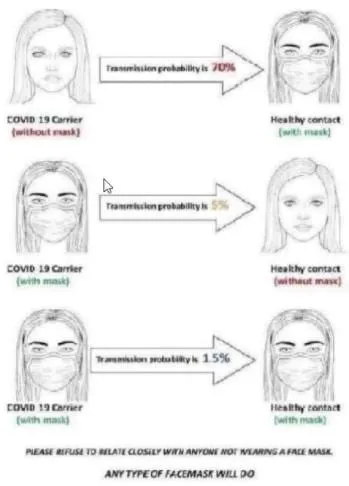
There has been some controversy about mask-wearing over the last few months. While some cultures like those in Japan and Korea (which have had far better luck so far dealing with the Covid-19 virus than us in the West) are very accustomed to wearing face masks, our culture tends to resist or even to disparage mask-wearing. Initially our health experts told us that face masks were of little benefit to protect us from infection. But further research has shown conclusively that wearing a face covering definitely protects others from us if we happen to be contagious, even if we don’t think we are sick, and that when most people wear face-coverings, even home-made ones, transmission rates are dramatically reduced. So mask-wearing in public, although it takes some getting used to, is actually an act of solidarity with our friends, neighbors, community and world.
Below is a graphic sent to me by a local internal medicine physician, Dr. Abe Ishaya, which illustrates this point. Even if you find it annoying or embarassing, remember that putting on a face covering is actually an expression of kindness to all those around you. Things might be different if every single person you encounter had a great anti-inflammatory diet, exercised regularly, took vital anti-inflammatory supplements such as vitamin D and magnesium, and had regular chiropractic care. But many or even most folks you will encounter do not do all or even any of these things, for a number of reasons including many that are out of their control. So, for now and the forseeable future, wear a mask!
It’s Time for Better Sleep
OK, quick quiz: How much has your sleep been affected during the coronavirus pandemic? We’re not just talking about the amount of sleep; after all, some people may actually be getting more sleep than usual if they’ve been out of work, restricted in where they can go, etc.
Then again, losing your job or spending more time glued to the COVID-19 updates on TV or your cellphone probably isn’t helping your stress levels, which isn’t helping you sleep, either.
Here’s question #2: How well are you sleeping? Sleeping for eight hours a night and sleeping well for eight hours are two entirely different things. You can hit the bed at 10 p.m. and roll out of bed at 6 a.m., but those eight hours may have been filled with tossing, turning, stressing, thinking and never getting to the deep, restorative sleep your body and brain need.
If any of the above applies to you, and we’re certain it applies to literally millions of people these days, it’s time to do something about it. It’s time for better sleep. Here’s a simple three-step plan to do it:
\1. Tune It Out: We know this can be easier said than done, but we all need to try. Particularly in today’s social-media-driven world, it’s far too easy to get news, opinions, and conversations at your fingertips, 24/7. The more we tune in, the more we take in, obsess about, reflect upon; and all that information stays in our brains, even as we try to get to sleep. Tips: Pick a few times during the day to review the latest news, check your social media, etc. Ignore the rest. Most of all, don’t tune in right before bed, or you’ll be up all night thinking, instead of resting.
\2. Block It Out: We live in a fashion-over-function world, and our homes are a great example. We’re inundated with home renovation shows that teach us to crave a certain “look,” even if that look doesn’t deliver the function we need. Does your bedding look amazing … but keep you hot (or cold) all night? Do your window treatments keep your bedroom dark – we mean really dark – all night? Do you have a high-tech flat-screen TV mounted on your bedroom wall … that you tend to watch into the wee hours? Tips: If you’re going to achieve quality sleep, your bedroom has to be a help, not a hindrance. Fashion without function in your bedroom equals restless nights that will compromise your health.
\3. Calm It Down: We’ve already told you to tune it out a few hours before bedtime; but you have to take it a big step beyond TV and technology. Much like a car, your body has trouble going from 100 miles an hour to a complete stop; it needs a slow, gradual deceleration. Unfortunately, when it comes to eating and exercise habits, too many people make a similar mistake. Eating or exercising right before bed essentially puts your body into overdrive, rather than slowing it down.
In the case of exercise, your muscles are initiating the repair process, rather than resting. In the case of food, your body is starting the digestion process. Either way, it’s a poor way to wind down. Tips: Try to exercise / eat your last meal of the day at least 2-3 hours before bedtime. Also keep in mind that if your last meal is particularly greasy, fatty, sugary or fibrous, it could compromise sleep before it even gets started.
Sleep is rapidly being recognized as a major factor in overall health and wellness, with chronic poor sleep linked to a higher risk of numerous health issues. But don’t take our word for it; just reflect on how your body feels after a poor night’s sleep. Now extrapolate that to weeks, months or even years of inadequate, poor-quality sleep. Talk to your doctor for more information.
More on the sun:
Sun Exposure During Pregnancy Lowers Risk of Learning Disabilities in Children
In a study by Hastie et al. of 422,512 Scottish schoolchildren, 79,616 (18.8%) had learning disabilities. Maternal records of total hours spent in the sun and total ultraviolet radiation (UV) exposure during pregnancy were collected and analyzed. Results showed a strong inverse relationship between time spent in the sun during pregnancy and the prevalence of learning disabilities in offspring. Children of women with the most sunshine and UVB exposure during pregnancy had the lowest risk of learning disabilities, whereas children of women with the lowest sunshine and UVB exposure during pregnancy had the highest risk. This study indicates a dose-response relationship between maternal sun exposure during pregnancy and incidence of learning disabilities in their children. This means that more sunshine exposure during pregnancy, specifically UVB light, is associated with a lower risk of learning disabilities in children.
Read more at campaign.r20.constantcontact.com